Restaurant energy costs: how to calculate them, and why newer equipment actually pays off
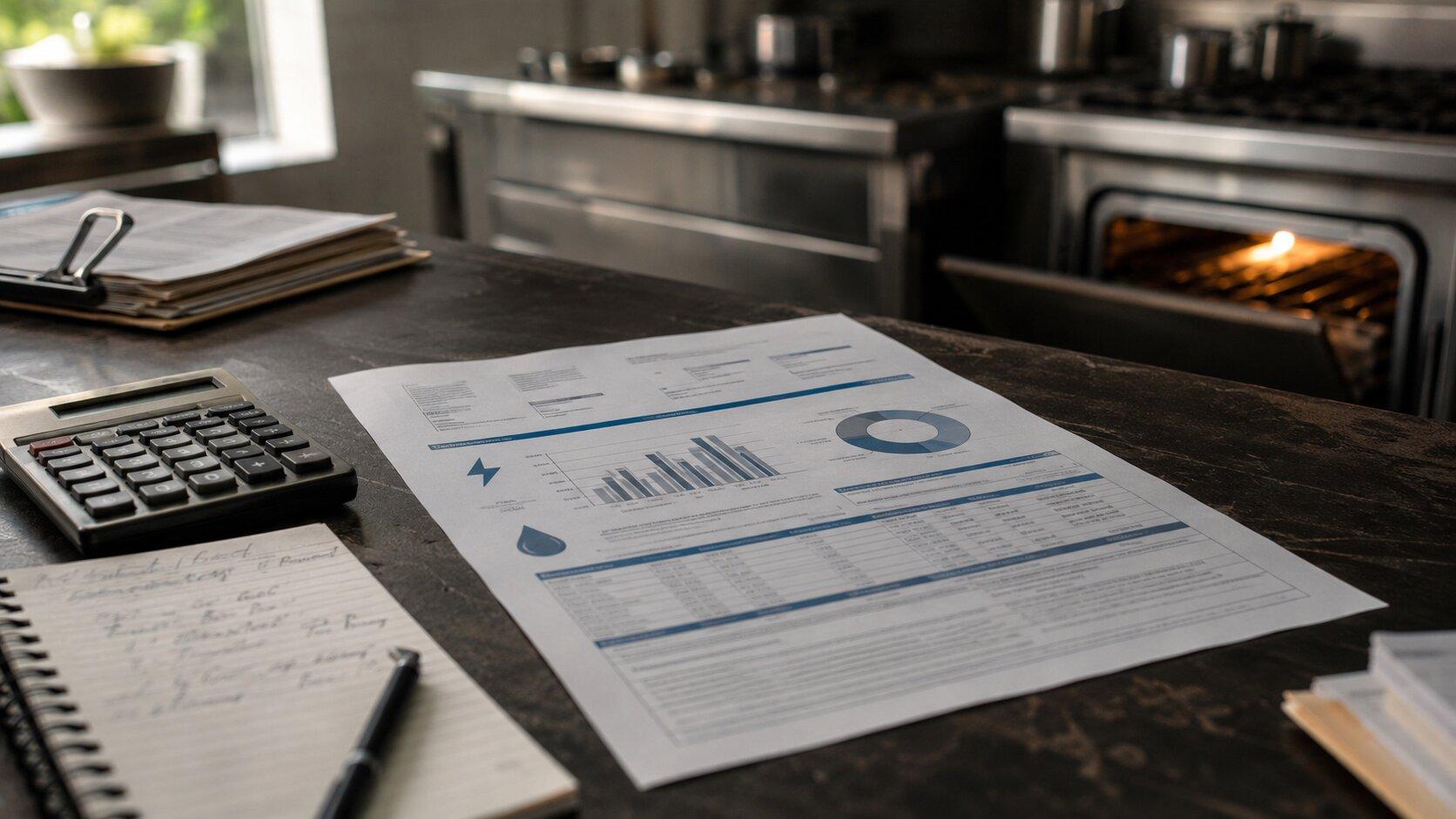
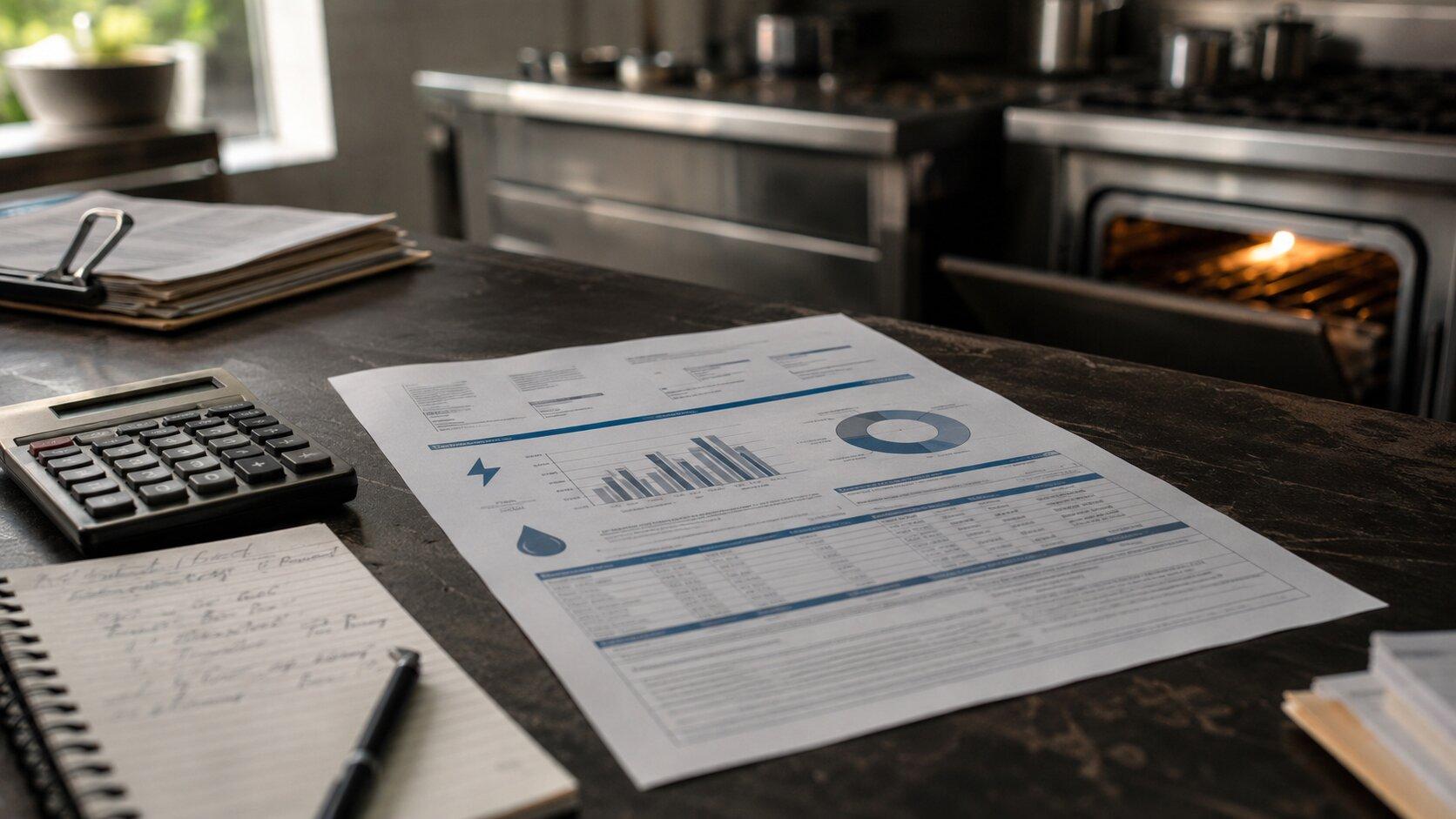
"Utilities" is the cost line almost nobody breaks down. It gets lumped into one number alongside rent and other fixed costs, without ever asking how much cooking costs versus refrigeration, or whether that number is normal or too high for the venue type. With bimonthly bills ranging from €1,500 to €4,000 for the same type of venue, knowing where that energy goes makes a real difference to the bottom line.
Where the energy actually goes
The split is surprisingly stable across countries, even if the exact percentages differ: cooking and refrigeration together account for roughly 70-80% of a commercial kitchen's energy use. Cooking leans on gas where gas is used for cooking; refrigeration is almost entirely electric, and unlike cooking, it runs 24 hours a day regardless of how many covers you serve that day.
Ventilation and extraction account for another 15-17%, dishwashing 5-10%. The same four categories show up everywhere — the exact percentage shifts, the hierarchy does not.
What equipment actually consumes
The figures below come from real manufacturer spec sheets (Rational for ovens, Electrolux Professional for fryers, Hobart and Winterhalter for dishwashers), not generic estimates. These are rated power, not average consumption: real-world cost depends on how many hours a day the equipment actually runs at full load, not how many hours it stays switched on.
Rated power from real manufacturer spec sheets, not average consumption
A large combi oven (20-pan, for very large operations) can reach 68 kW — but that is an extreme case. For the average restaurant, ovens and fryers sit in the 6-30 kW range, dishwashers 8-15 kW (up to 40+ kW for conveyor models with drying in high-volume venues). Refrigeration is a different story: a modern, efficient reach-in fridge uses around 4-5 kWh a day — an actual consumption figure, not rated power, because the compressor cycles and never runs continuously at full load.
The formula for calculating cost
This works well for equipment with fairly constant draw — griddles, some simple fryers. Ovens, fryers and refrigeration each have a phased consumption pattern that rated power alone does not capture.
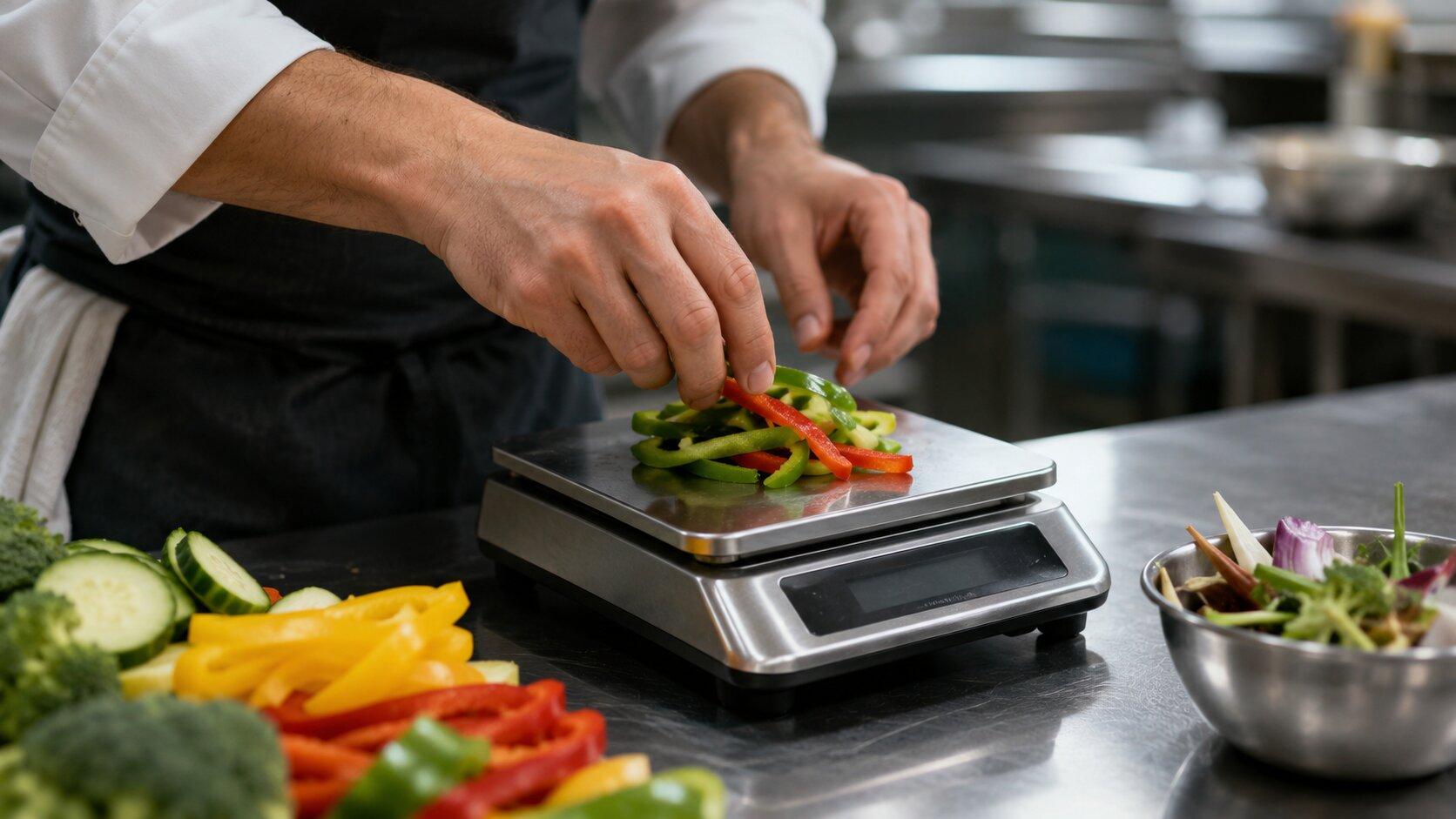
Ovens have two very different phases. During preheat, they genuinely draw full rated power for 8-12 minutes if electric, or 15-25 minutes if gas, to reach temperature from cold. Once at temperature, they switch to holding mode and draw a fraction of that — the ENERGY STAR standard sets the holding consumption of an electric convection oven at around 1.0-1.4 kW, regardless of the oven's size. A 22 kW-rated oven running 6 hours a day does not consume 22 kW for all 6 hours: it draws 22 kW for the 10-15 minute preheat, then around 1.2 kW for the rest of the time, with short recovery spikes each time the door opens to load food. Using rated power for the entire operating window can overstate the real cost by 3-4x.
Fryers follow the same logic, less extreme. During preheat they bring the oil up to temperature at full power, then drop to a holding mode that draws roughly 20-30% of full power — enough to keep the oil hot between batches without having to start from cold every time.
Refrigeration breaks the formula the other way. There is no preheat, but the compressor cycles on and off to hold temperature, so the simple formula is not reliable at any point. Better to use the daily consumption figure from the spec sheet directly (the 4-5 kWh/day figure cited above), which already accounts for the real cycling pattern.
The practical takeaway for ovens and fryers: the expensive part is switching on, not holding. Turning an oven on for a single dish and then off again is the most expensive way to use it — that preheat costs the same whether you cook one tray or ten. It pays to plan service around batching everything compatible with the same temperature into one heating window: once the oven is up to temperature, using it for several dishes instead of turning it off and on again spreads the preheat cost over more portions, not just one.
Best for griddles and simple fryers. For an oven, use holding power (1.0-1.4 kW), not rated power — see above
Is your venue in range?
US data (EIA) shows fast food locations using about 73.9 kWh per square foot per year, full-service restaurants 43.5, and bars around 26.3. This is not because fast food wastes more: it packs high-power equipment (fryers, rapid-cook ovens, illuminated signage) into a small footprint with minimal dining space, while a full-service restaurant runs similar equipment across a much larger footprint, with plenty of dining area diluting the per-square-foot average. Food service overall is roughly four times more energy-intensive than the average commercial building.
To benchmark yourself: calculate your EUI (Energy Use Intensity) — annual kWh consumed divided by square footage — and see where it falls against your format. Well above range does not automatically mean old equipment: sometimes it is a miscalibrated thermostat, a door seal that has failed, or extraction running even when the kitchen is closed.
Why newer equipment actually pays off
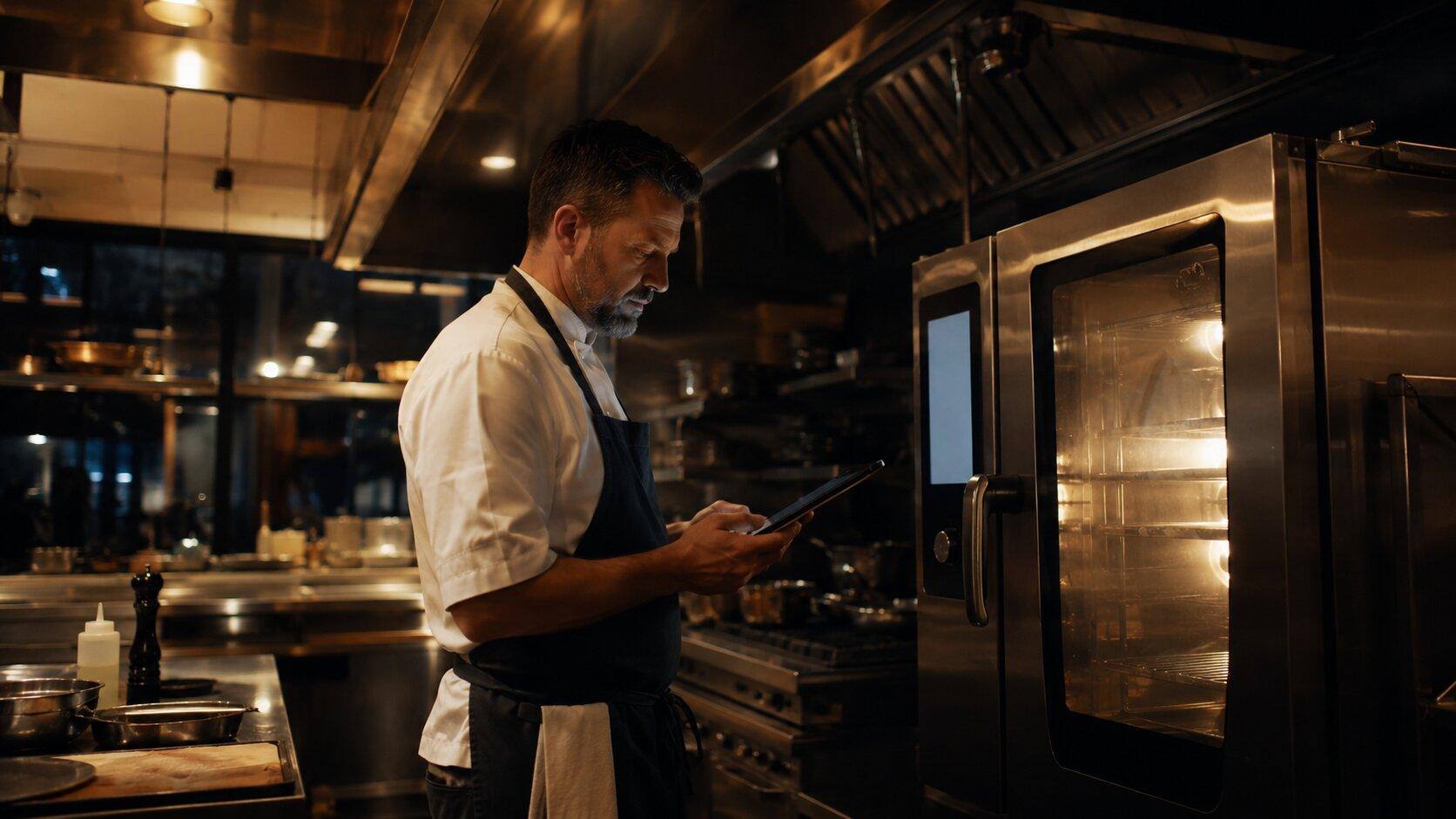
This is not just manufacturer marketing. Variable-speed compressors, now standard in modern refrigeration, use 20-40% less energy than the fixed-speed compressors that were standard until a few years ago — and today's models are 25-30% more efficient than the "most efficient available" options from just a few years back. If you bought "efficient" in 2018, it is probably already outdated.
Real savings data (source: the ENERGY STAR programme, figures in US dollars — in markets with higher per-kWh prices, the euro-equivalent saving can be larger for the same efficiency gain): a certified dishwasher saves around $1,500 a year versus a standard model, a convection oven around $680, a steam cooker around $1,000, a gas fryer around $410. A full kitchen equipped with efficient units can save over $5,000 a year.
Payback periods vary a lot by upgrade. Replacing door gaskets on a walk-in cooler is cheap and pays for itself in 6-12 months — almost always worth doing. A full refrigeration unit costs 10-20% more than a standard model but pays back in 3-4 years. Demand-controlled ventilation (adjusting fan speed to actual cooking load) costs €5,000-15,000 but pays back in 2-3 years.
Frequently asked questions
How much does energy actually cost a restaurant per month?+
Which equipment uses the most energy in a kitchen?+
Is it worth replacing old equipment before it breaks?+
Is my energy use high or normal for my type of venue?+
Is it worth turning the oven on for just one dish at a time?+
See your energy bill trending up before it becomes a problem
EUSTAK reads your electricity and gas invoices alongside your supplier invoices and classifies them by category, so you see the month-by-month trend, not just the total at year-end.
Track your venue's costs