How to Set a Selling Price That Covers Your Costs and Leaves a Real Margin
Most prices in small business come from one of two places: what competitors charge, or gut feel. Both get you to a number, but neither tells you if you'll make money. A price built from your actual costs is the only one that reliably covers what you spend.
The three main pricing methods
There are three approaches to pricing, each with different advantages and limits:
Cost-plus
Start from total cost and add a margin percentage. Simple and guarantees cost coverage, but ignores perceived value and market prices.
Value-based
Set the price based on what the customer is willing to pay for the benefit they receive. Maximises margin but requires deep customer insight.
Market pricing
Align with the prices of direct competitors. Reduces the risk of being out of market but forces you to compete on price rather than value.
Cost-plus: the essential formula
Start here before looking at competitors. You need to know your minimum sustainable price: the floor below which you're losing money on every unit sold.
Note: this formula calculates margin on the selling price (standard in hospitality and retail). If you want to calculate markup on cost, the formula is different:
Margin on price and markup are not the same: €38.46 at 35% margin ≠ €33.75 at 35% markup
How to calculate total cost per unit
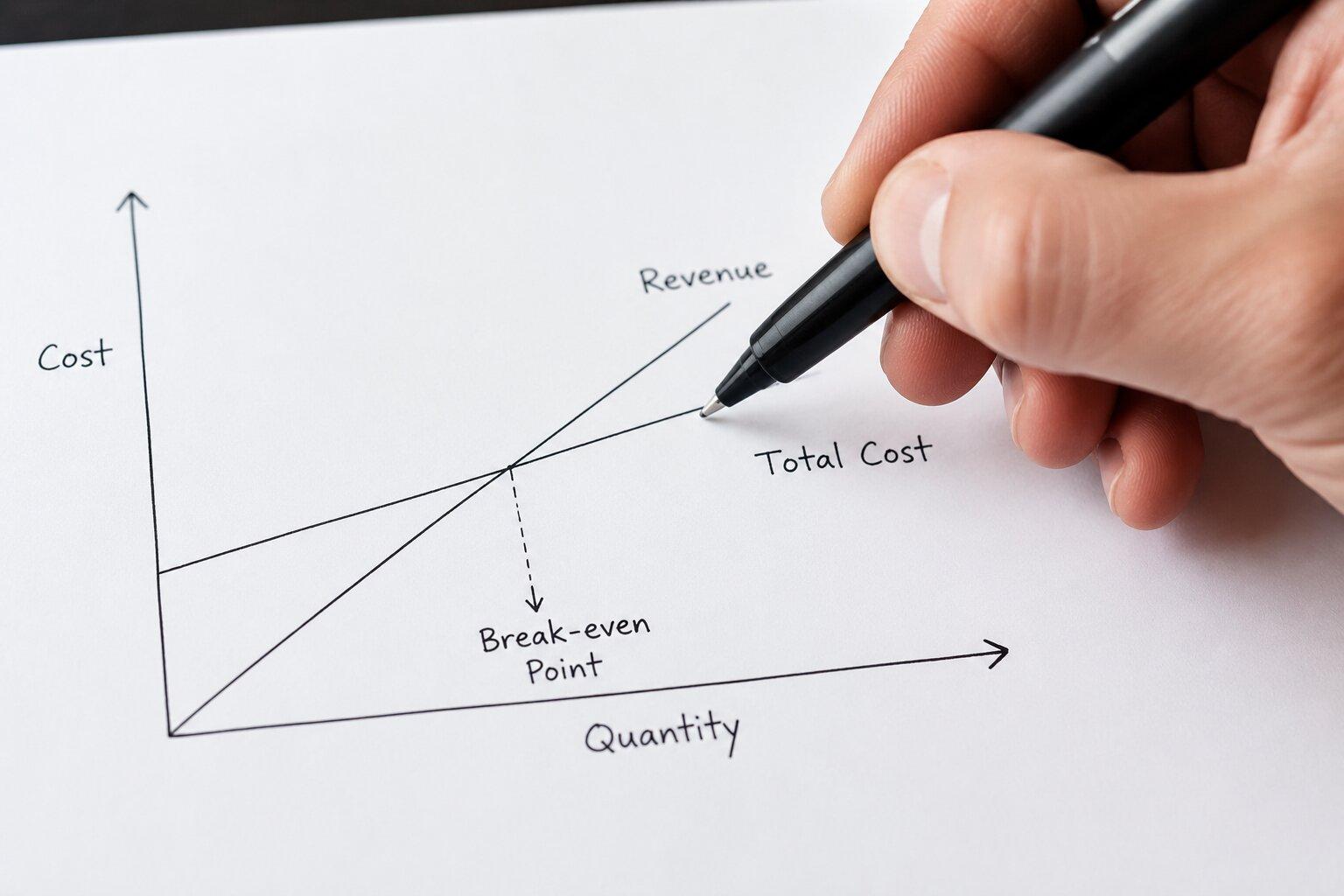
Total cost includes both direct variable costs and a share of fixed costs. Many business owners forget the second part and end up with a price that covers materials but not rent, permanent staff, or depreciation.
Example: if you have €5,000 in monthly fixed costs and sell 200 units, each unit must contribute €25 to fixed costs — regardless of what the materials cost.
The mistake is to calculate the unit cost only on a good month. If you sell 300 units in December but 160 in February, the fixed-cost share changes dramatically. For pricing, use a realistic average volume or a conservative scenario, otherwise the price looks profitable only when demand is high.
For restaurants, this means starting from the recipe cost and then checking whether the dish also supports labour and fixed costs. For service businesses, it means translating fixed costs into billable hours. The principle is the same: every sale must cover direct cost first, then contribute to the structure.
When the right price is not the lowest one
Price communicates positioning. A price that is too low can signal low quality — especially in professional services, premium food, and markets where quality is hard to evaluate before purchase.
If your competitors sell at €30 and you sell at €18, the customer asks why. If the answer isn't immediate and credible, the conclusion is usually "it must be worse." Don't race to the bottom on price. Win on something else.
Before cutting a price, calculate the extra volume required to recover the same profit. If a product sells for €100 with €60 of cost, the contribution is €40. A 10% discount reduces the contribution to €30. You now need 33% more sales just to earn the same gross profit. Many promotions fail because they create volume without enough contribution.
Psychological pricing tactics: how presentation changes perception
At the same economic value, how you present a price shapes the buying decision. Four concrete tactics, documented across many industries:
- Charm pricing — ending a price in .99 or .95 (€19.99 instead of €20) makes it feel cheaper. Works well on consumer goods and low-to-mid price points.
- Prestige pricing — the opposite: rounding up (€50 instead of €49.99) signals higher quality. Works better on premium products, where the customer doesn't want to feel like they're buying a bargain.
- Anchor pricing — showing a struck-through original price next to the discounted one makes the discount feel more compelling, even at the same final price.
- Decoy pricing — introducing a third option that makes another choice look more attractive. The classic small/medium/large drink example, where medium pushes customers toward large because the price gap feels small.
These tactics don't replace a price built from real costs — they act afterward, on presentation. Choose them to match your positioning: charm pricing on a premium product, or prestige pricing on a budget one, sends the wrong signal.
Target gross margin by sector
Reference ranges to orient your margin target:
Monthly pricing checklist
Review your top-selling products or services every month: actual direct cost, selling price, gross margin, discount rate, sales volume and contribution to fixed costs. If a product sells well but does not contribute enough, it is not a best seller; it is a workload generator.
Connect this review with your gross and net margin analysis and your break-even point. EUSTAK helps by keeping supplier costs up to date, so price decisions are based on current invoices instead of old assumptions.
When costs change, do not wait for the annual review. Ingredient prices, supplier conditions, rent increases and payroll changes should trigger a pricing check immediately. A small cost increase absorbed for too long can erase the margin of an entire category before anyone notices it in the year-end accounts.
Frequently asked questions
If my price is higher than competitors, will I lose customers?+
When does it make sense to sell below cost?+
How do I handle customers who ask for discounts?+
Do psychological pricing tactics (.99 endings, anchoring) actually work?+
To apply the formula to your own numbers, the free food cost and selling price calculator gives you unit cost, margin and a suggested price in minutes.
Know your real unit cost before you set the next price
EUSTAK reads your supplier invoices and updates ingredient and material costs automatically, so your price calculations are based on what you actually pay today, not last quarter.
Price from real costs