Bakery and pastry food cost: what actually changes
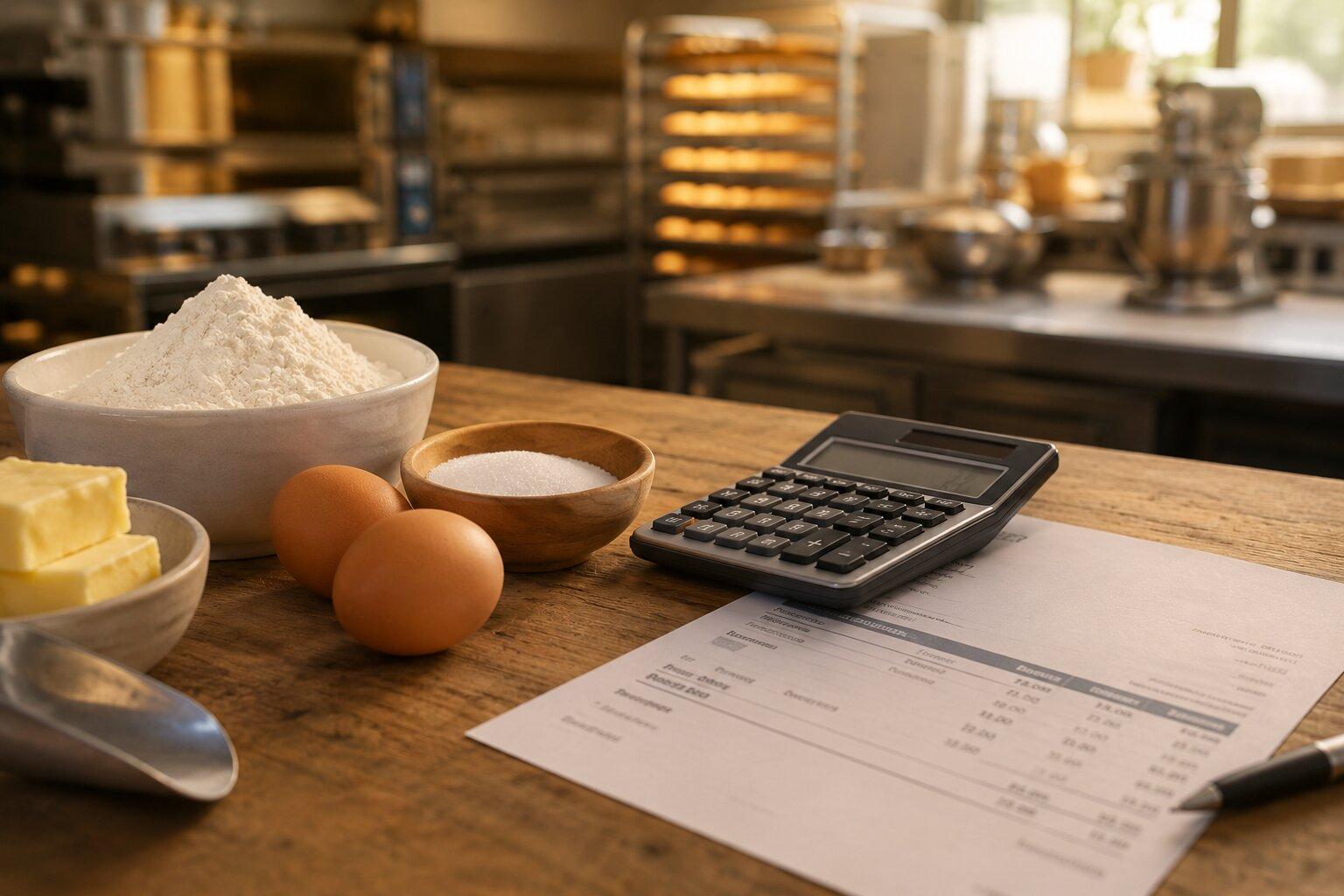
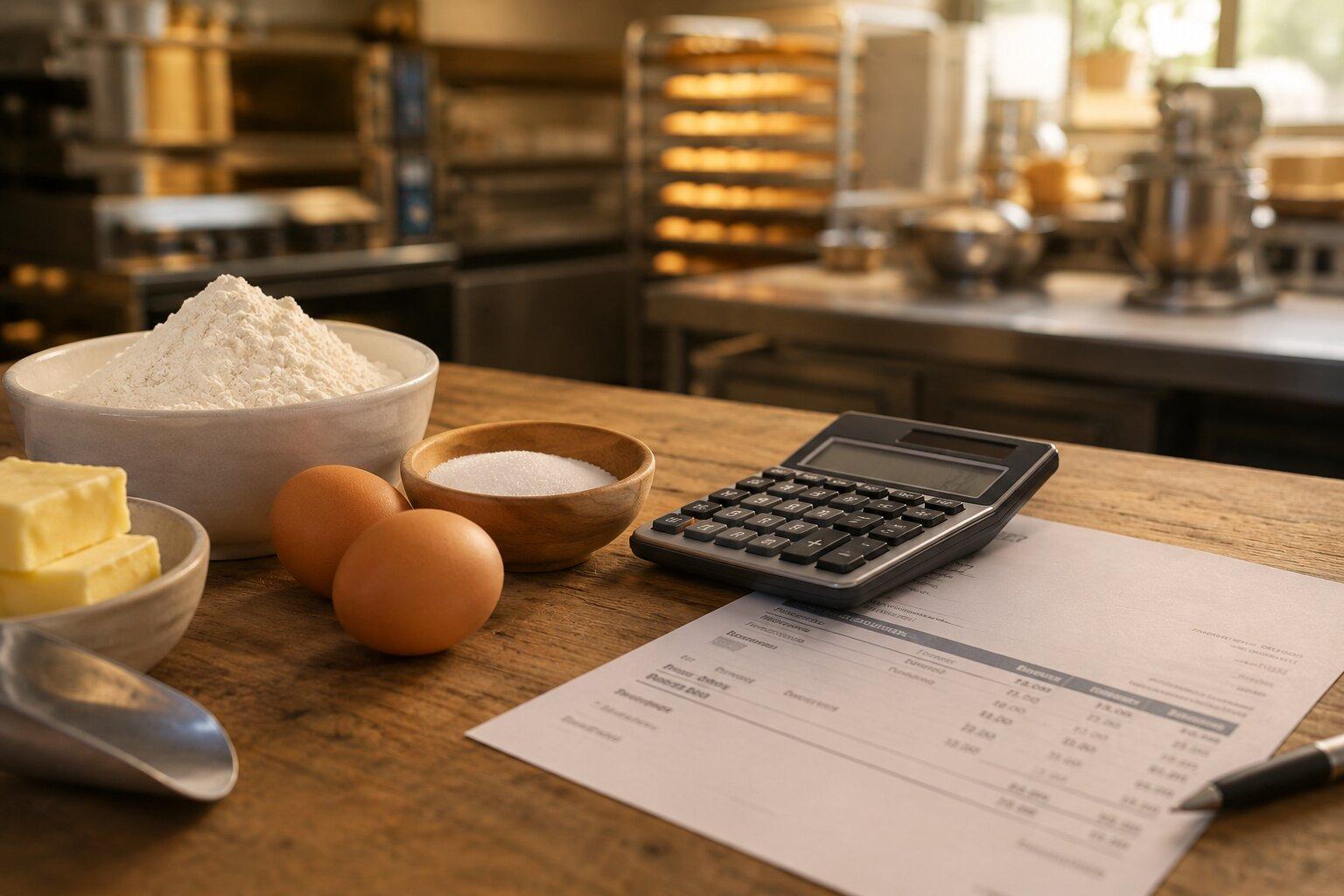
Classic food cost (ingredient cost divided by selling price) assumes a dish that gets cooked and sold in the same service. Bakeries and pastry shops work differently: a real share of today's production won't sell at all. It gets discarded, marked down or donated at the end of the day. The problem is that no industry standard tells you how to fold that cost into the calculation. It's the part most spreadsheets simply leave out.
Why bakery cost isn't like restaurant cost
Three real differences, not just differences of degree. The first is raw-material volatility: EU cereal prices rose 52% between Q3 2021 and Q3 2022 (Eurostat). Eggs saw an even sharper shock: US retail cage-free egg prices hit $5.26 a dozen on January 12, 2024, after roughly 13.6 million egg-laying hens were culled for avian flu (USDA data). In Italy, as of February 2025 butter and cocoa were up 19.2% and 15.4% year-on-year, coffee 18.3% (Confartigianato Studi).
The second difference is production time. A croissant isn't made in twenty minutes like a plated dish: dough and lamination one day, shaping, proofing and baking the next. Real labor hours spread across two days before the product even reaches the display case, and labor cost hits differently than it does for a dish cooked to order.
The third — the one almost no calculation includes — is unsold stock. It's the core of this article.
The real problem: unsold stock
A restaurant orders portions with a relatively small margin of error: it roughly knows how many covers it'll do. A bakery or pastry shop has to keep a display case looking full and inviting all day, which almost always means producing more than will actually sell.
A 2021 study of five bakery and pastry businesses, published in the journal Agriculture (MDPI) by Goryńska-Goldmann and colleagues, measured production loss between 9.7% and 14.4% of total output, with bread at 10.4-13.4% and fresh pastry as high as 24.4% in some cases. In Italy, the trade association Assipan estimates that of roughly 72,000 quintals of bread produced nationally every day, about 13,000 quintals (nearly 18%) get discarded, worth around €43 million a year.
Here's the honest part: no published industry standard exists (from any trade association, software vendor or technical textbook) for how to fold this waste into a bakery's food cost calculation. What you find online are practical suggestions from bakery-management software vendors, recommending a generic buffer of 5-15% of ingredient cost. They're reasonable starting points, but not a verified benchmark: your bakery's real waste rate is what shows up in your own display case at closing time, not a number borrowed from a blog.
How to fold waste into the food cost calculation
Theoretical food cost is the one calculated from the recipe, as if everything you produce got sold. The waste rate is the share of production that ends up unsold: discarded, marked down at closing, or donated. Multiplying one by the other gives a more honest estimate of what it actually costs to keep the display case full.
The waste rate should be measured for your own bakery. The figures cited above (10-18%) are a starting point, not your number
What to do with unsold stock before throwing it out
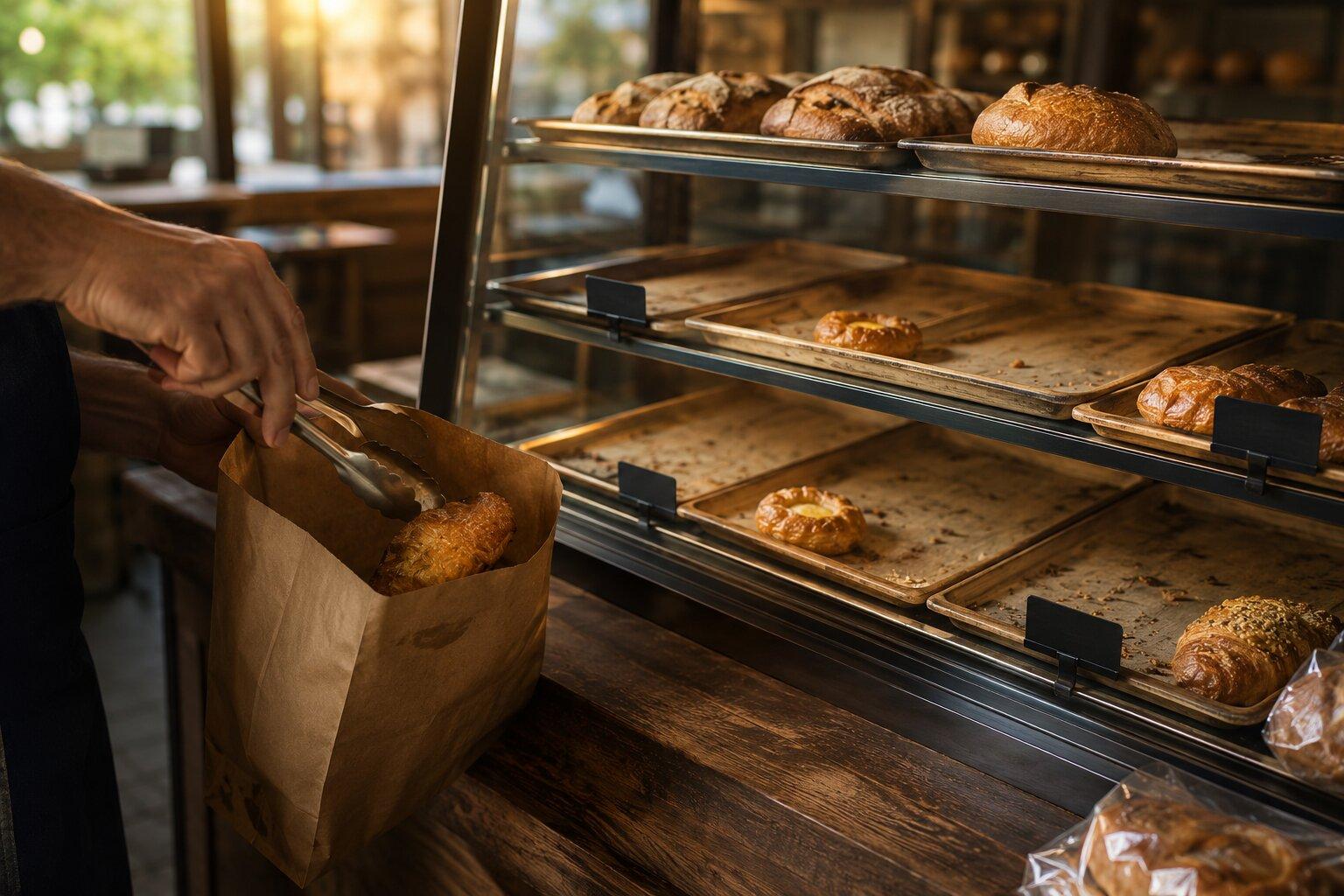
In practice you've got three routes: sell it marked down at closing, donate it, or repurpose it into another product. In Paris, the initiative Demain works with 20+ bakeries, recovers around 50,000 unsold items a month and resells them at 50% off. But even an operation entirely dedicated to recovery only manages to resell 95%, not 100%: some loss remains either way.
On repurposing, some concrete examples: UK chain GAIL's Bakery runs a dedicated product line ("Waste Not") turning yesterday's croissants into almond croissants or chocolate babka, and dough offcuts into crackers. In the Netherlands, the Top Bakkers Groep (65 bakeries) ferments bread waste into a sourdough-like ingredient, claiming a 20% reduction in fresh grain use.
But watch out for a common mix-up: donating doesn't make the cost free. The ingredient cost was already incurred when you bought the flour, butter and eggs. Whether the finished product gets sold, thrown out or donated doesn't change that money already spent. The benefit of donating is tax-related (where the law provides for it) and reputational, not a way to recover the cost.
Donating unsold stock: the tax side, by country
Rules vary a lot by country, and it's worth checking your own before assuming anything. In the UK, until recently donating food was actually taxed as a "deemed supply": VAT was due on the cost value, which discouraged donation. That changed with the Finance Act 2026, effective April 1, 2026, which removed the VAT charge on qualifying food donations to registered charities (capped at £100 per item). There's no UK equivalent of an extra tax deduction for donated stock beyond the ordinary expense treatment.
In the US, IRC §170(e)(3) gives an enhanced deduction: the lesser of (cost basis + half the appreciation) or (2× cost basis), capped at 15% of the donating business's net income, with a 5-year carryforward for unused amounts. In Italy, the "Legge Gadda" (Law 166/2016) removes VAT and phantom taxable income on donated goods and simplifies the paperwork, with a specific rule for bakery products unsold within 24 hours of production. In every case, donating is tax-neutral or tax-advantaged, never a way to recover the ingredient cost itself.
Frequently asked questions
Is bakery food cost calculated differently from a restaurant's?+
How much does unsold stock really add to real food cost?+
Is it worth donating unsold stock instead of discounting or discarding it?+
Is there a standard waste percentage to use in the calculation?+
Why are flour, eggs and butter such unstable costs?+
Theoretical food cost takes two minutes to calculate. Real food cost is what EUSTAK tracks for you
EUSTAK reads your suppliers' invoices and tracks the real cost of flour, butter, eggs and raw materials, so you see what each product actually costs, waste included.
Track your bakery's real costs