Dental materials and inventory costs: why price is the least of your problems
Materials are the hardest cost to monitor in a dental practice. Frequent orders, multiple suppliers, stock that moves in small quantities — and yet their monthly incidence on revenue can drift by several percentage points before anyone notices.
Price is just one variable. Consumption patterns, stock discipline, expiry dates, supplier conditions and treatment mix all determine what materials actually cost each month. Tracking by category is what separates a drift you can correct from a loss you discover too late.
How much materials affect revenue
Material costs can look small when each order is reviewed separately, but their monthly incidence on revenue is often significant. Consumables, implants, impression materials, anesthetics and hygiene products should be measured as a percentage of production, not only as isolated purchases.
Formula: material cost incidence = material purchases adjusted for inventory / clinical production x 100. If production is EUR90,000 and materials consumed are EUR8,100, incidence is 9%. If the same clinic moves to more implant or surgery work, the benchmark changes. That is why material cost should be reviewed by treatment family, not only as one monthly total.
Common inventory mistakes
The most common mistakes are ordering without checking stock, keeping too many variants, losing track of expiry dates and letting clinicians choose products without cost visibility. These habits create hidden waste and make profitability harder to read.
Another common mistake is confusing purchase volume with consumption. Buying a large order in one month does not mean the materials were used in that month. Without inventory movement, the clinic may think costs are volatile when the real issue is stock timing. A minimum monthly stock count for high-value categories helps separate purchasing from actual consumption.
Setting minimum stock levels
A simple rule solves the "order when something runs out" problem: for each high-turnover material, set a minimum quantity that triggers a reorder, based on real usage frequency and the supplier's pack size.
Example: if a practice uses 3 packs of anaesthetic a month and the supplier delivers within 5 working days, the minimum stock should cover at least 10-15 days of consumption beyond the delivery time, so the practice never runs out while waiting.
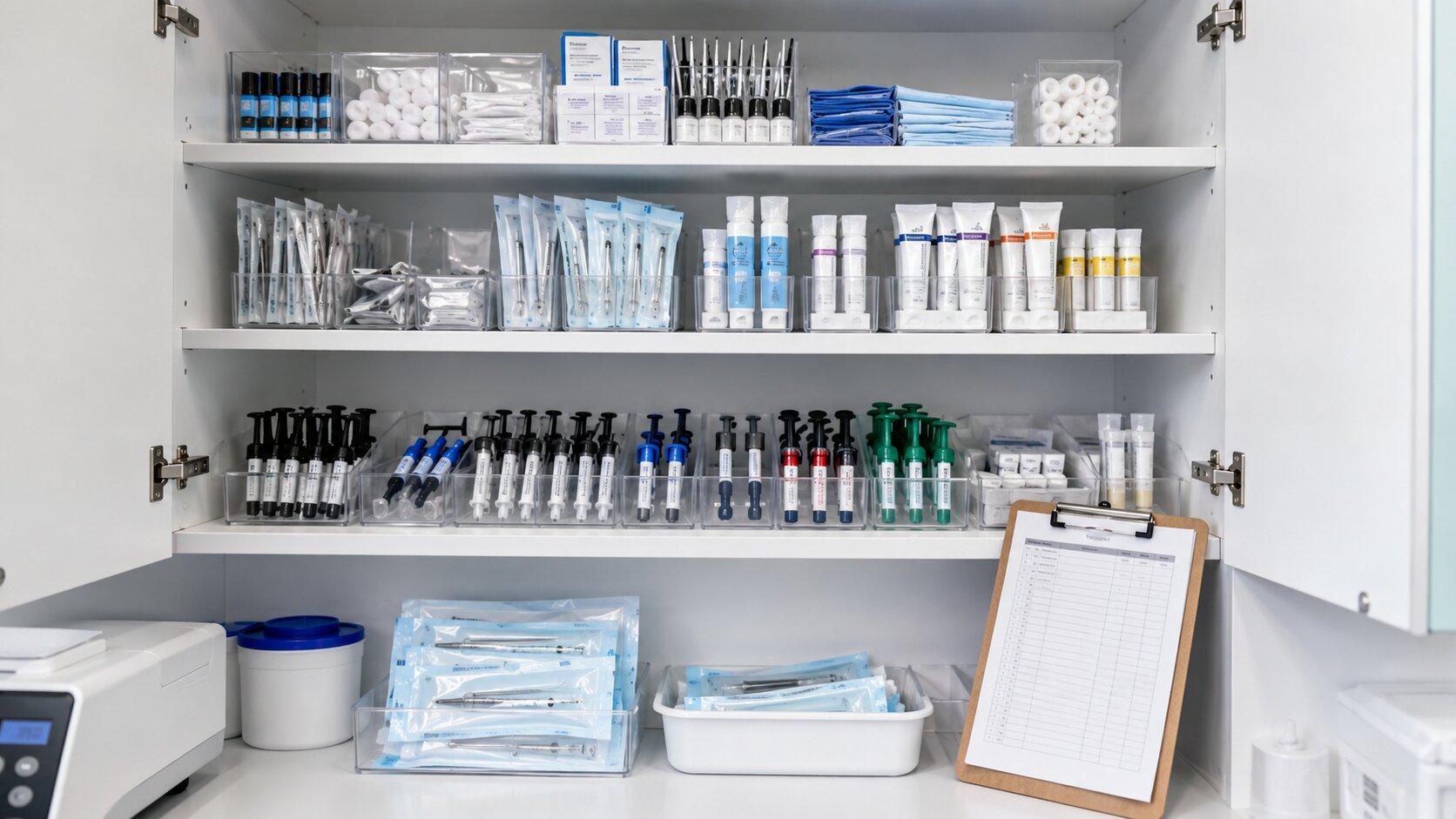
Once thresholds are set for the main materials, usually 10-15 references cover 80% of spend, a check every two weeks is enough: anything below threshold gets reordered, everything else waits. No dedicated software is needed to start, a sheet with reference, minimum threshold and last check date is enough.
How to track actual costs
Use supplier invoices to group materials by category and compare them with clinical production. This shows whether a cost increase comes from higher prices, higher consumption, more complex treatments or simple stock inefficiency.
Start with categories: implants, surgical materials, impression or scan-related costs, hygiene, disposables, anesthetics and general consumables. Then compare each category with the production that uses it. If implant material cost rises while implant production is stable, the issue may be price, waste or product selection. If it rises together with production, the increase may be healthy.
Orders and suppliers
Centralising orders, reviewing supplier concentration and comparing unit prices regularly helps reduce margin leakage. The aim is not to buy the cheapest material, but to know which products drive cost and where negotiation or standardisation makes sense.
Standardisation is often more powerful than negotiation. If every clinician uses different brands, formats and protocols, the practice buys more references, keeps more stock and loses visibility on consumption. A shared list of approved materials reduces waste without lowering clinical quality.
It also helps to separate routine consumables from strategic materials. Gloves, barriers and basic disposables should be controlled with minimum stock and unit prices. Implants, membranes, aligner-related materials and surgery products should be reviewed by case and treatment margin. Treating all materials as one bucket hides the decisions that matter.
When a supplier proposes a discount, calculate the real effect. A 5% discount on a product used rarely matters less than a 2% improvement on a category purchased every week. Likewise, a large order that earns a discount may be bad if it creates expiry risk or locks too much cash in the storeroom.
A practical review can start with the twenty references that represent most of the monthly spend. For each one, record supplier, unit price, quantity purchased, quantity consumed and expiry risk. This small list usually reveals more than a full theoretical inventory system, because it focuses on the products that actually move margin.
Assign responsibility clearly. Clinical staff can define acceptable alternatives, administration can monitor invoices and the practice manager can approve stock levels. If nobody owns the process, every order feels urgent and the clinic loses negotiation power because purchases are scattered.
To get started: set minimum and maximum stock levels, review expiry dates monthly, approve high-value purchases centrally, compare unit prices, separate purchases from consumption and connect the result with dental practice KPIs. EUSTAK helps by reading supplier invoices and making material cost incidence easier to monitor month by month.
Frequently asked questions
How do I distinguish between high material costs driven by production growth versus inefficiency?+
We use many different brands for the same material category. Is that a real problem?+
What is the simplest way to start tracking material costs without a full inventory system?+
How do I calculate the minimum stock level for a material?+
Spot material cost drift before it hits your margin
EUSTAK reads supplier invoices and groups material spend by category, so you see incidence trends month by month without manual tracking.
Track my material costs