How to calculate the production cost of a bridge in a dental lab
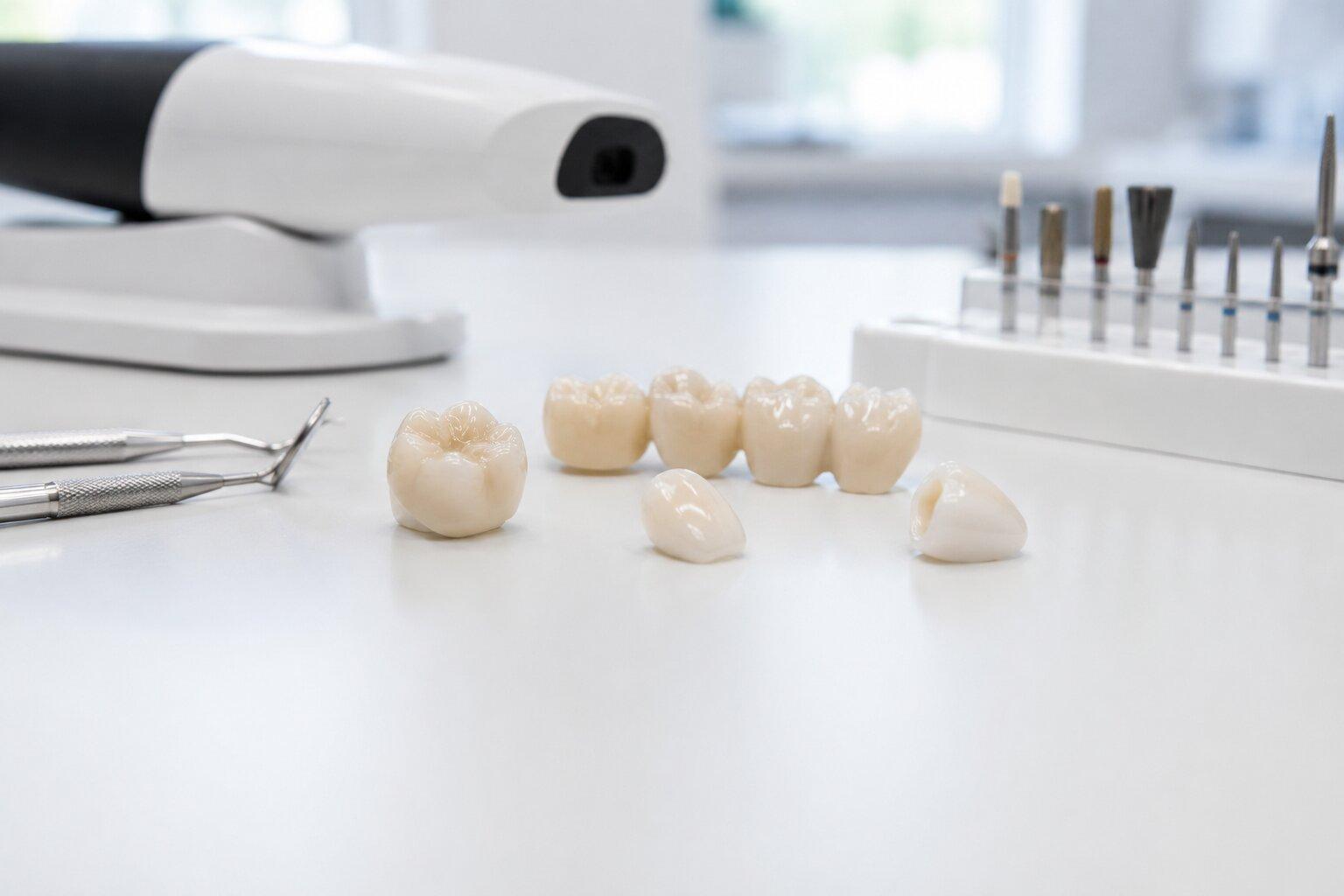
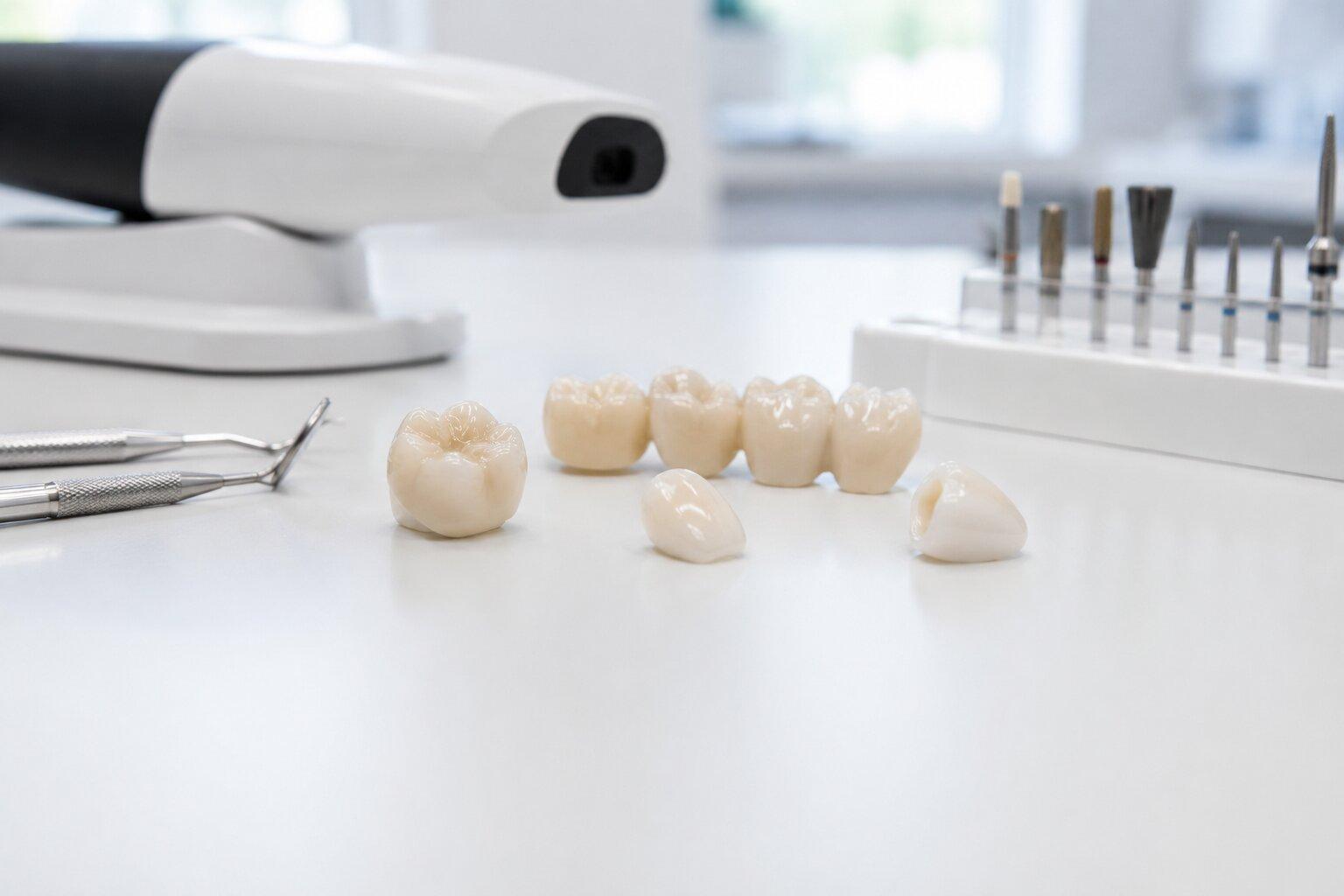
A bridge isn't simply "three crowns joined together." It has connectors to design, a fit across multiple abutments at once, and a production time that isn't obtained by multiplying a single crown's time by three. Treating it that way on the price list is the most common way to underestimate its real cost.
What bridge production cost actually is
As with a single unit, production cost is the sum of materials, labor time, and any outsourcing. The difference is that each component carries more weight: more material for the connectors, more time to align across abutments, more risk that something won't fit on the first try.
How much material a 3-unit bridge costs
A 98mm zirconia disk costs roughly $120 and yields about 20 single crowns on average (source: David Sipperly, Dentsply Sirona, Dental Products Report, 2021), around $6 per crown. A 3-unit bridge doesn't simply consume 3 times that share: connectors add mass, but they share part of the disk more efficiently than 3 separate crowns would. The real material cost should be measured against the disk actually used for that specific bridge, not estimated with a fixed multiplier.
Move the sliders to see how cost and margin change as production time and list price vary.
Example technician hourly rate: $25/h. Time is for the whole bridge, not per abutment.
Digital vs traditional lab: how much time matters on a bridge
A two-part peer-reviewed study from the University of Zurich (Mühlemann, Benic, Fehmer, Hämmerle, Sailer, Journal of Prosthetic Dentistry, 2019;121(2):252-257, Part II, specifically dedicated to lab time) measured technician time to produce a 3-unit tooth-supported zirconia bridge: 217-262 minutes with a digital CAD/CAM workflow, versus 370 minutes with the traditional lost-wax method. The absolute gap is wider than for a single crown: on bridges, the time saved by going digital counts even more.
This isn't an isolated finding: two more recent systematic reviews (Bessadet et al., Journal of Prosthetic Dentistry, 2025, on tooth- and implant-supported prostheses) confirm the same direction across a broader set of studies, even though they don't produce new direct time measurements. No study since 2019 repeats the original measurement with newer data: this remains the best available number.
To calculate your own bridges' production cost without doing the math by hand, try the free dental lab production cost calculator: enter your indirect costs and productive hours and get your hourly rate and real cost per unit in seconds.
Frequently asked questions
Is the material cost for a bridge simply three times a crown?+
Is the bridge production time per abutment or for the whole bridge?+
Does the crown remake rate (3.8%) also apply to bridges?+
Is it worth milling a bridge in-house or outsourcing it to a milling center?+
Same math, for every item on your price list
It reads supplier invoices and calculates the real cost per unit, bridges included, updated on every delivery instead of from memory.
Discover the calculator for dental labs